Application scenarios and importance of PCB fixtures
2025-02-15
First, PCB fixture overview
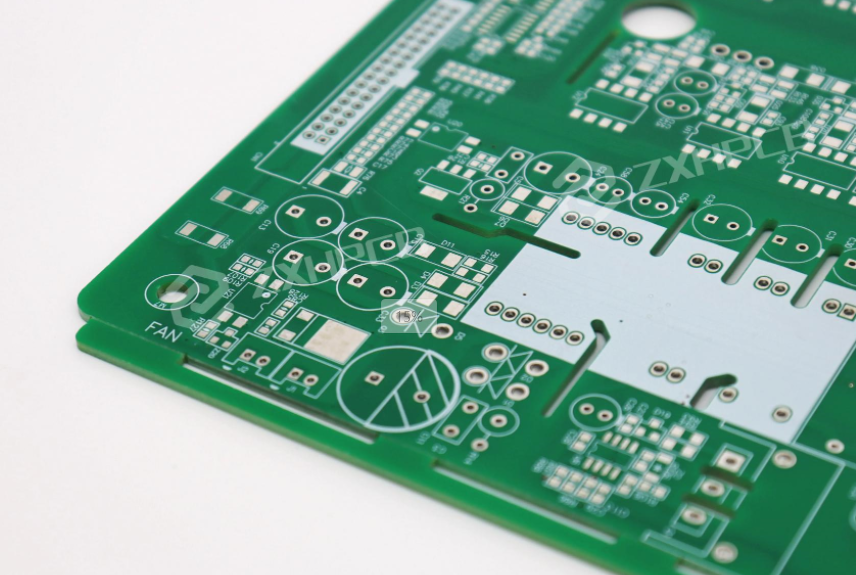
A PCB fixture is a tool used to fix and support a Printed Circuit Board (PCB) in the electronics manufacturing process to facilitate testing, assembly and other operations. Its design and application are crucial for improving production efficiency, product quality and reducing production costs.
A PCB fixture is a tool used to fix and support a Printed Circuit Board (PCB) in the electronics manufacturing process to facilitate testing, assembly and other operations. Its design and application are crucial for improving production efficiency, product quality and reducing production costs.
Second, application scenarios
In the mass production and assembly lines of modern electronic products, in order to achieve efficient and accurate operation, specially customized PCB clamping devices are usually used to ensure that each piece of product to be processed or tested can be stably placed and accurately positioned 1.
In the mass production and assembly lines of modern electronic products, in order to achieve efficient and accurate operation, specially customized PCB clamping devices are usually used to ensure that each piece of product to be processed or tested can be stably placed and accurately positioned 1.
The test stage of functional test platform construction is one of the key links to ensure the qualified product performance. The test setup environment composed of dedicated interface connectors and signal transmission lines can simulate the performance of electrical characteristics under actual operating conditions, so as to verify whether the newly developed hardware meets the expected functional requirements.
When the maintenance auxiliary equipment encounters complex and changeable problems that are difficult to deal with directly, it is necessary to use a special workbench with a precision instrument such as a microscope to carry out detailed observation and analysis, and implement the necessary repair measures. The supporting frame used at this time is a "fixture" in a broad sense.
For new models in the process of prototype development, before the lack of mature and stable commercial solutions, they often rely on some simple scaffolds homemade by the laboratory as temporary transition solutions to facilitate the experimenters to carry out various research activities until the final design is put into production.
Third, the importance of embodiment
Improve work efficiency: Reasonable use of fixtures can make the originally tedious and time-consuming manual process simple and fast, reduce the error probability caused by human factors, but also speed up the overall schedule;
Improve work efficiency: Reasonable use of fixtures can make the originally tedious and time-consuming manual process simple and fast, reduce the error probability caused by human factors, but also speed up the overall schedule;
Improve the quality of the finished product: good mechanical restraint helps to keep the relative position relationship between the components without deformation and displacement, so as to ensure that the welding firmness and flatness reach a high level;
Cost control: on the one hand, it reduces the frequency of material waste caused by rework, on the other hand, it reduces the high degree of dependence on external service providers, and realizes the purpose of optimizing the allocation of resources;
Enhanced safety protection: In the case that some special processes may involve high temperature and pressure or even toxic and harmful substances, it is particularly important to be equipped with appropriate safety protection facilities - and this is also an indispensable part of the value of the fixture.
In summary, whether from the perspective of short-term economic benefits or long-term strategic planning, it is necessary and far-reaching to pay attention to the research and development investment of PCB fixtures.
PCB has the following main features:
1. Conductivity: The PCB connects the electronic components together through the conductive layer to achieve the conductive function of the circuit.
2. Reliability: Strict processes and materials are used in the PCB production process to ensure the reliability and stability of the circuit.
3. Repeatability: Through a standardized production process, mass-produced PCB has the same performance and specifications.
4. Compactness: PCB can achieve highly integrated circuit design, making electronic equipment more compact and lightweight.
5. Scalability: The structural design of the PCB can be easily modified and expanded to adapt to different circuit requirements.
PCB is widely used in the field of electronics. First of all, PCB plays a key role in the computer field, such as motherboard, graphics card and almost all computer hardware needs to use PCB. Secondly, PCB is also indispensable in communication equipment, such as mobile phones, routers and so on. In addition, PCB is also widely used in consumer electronics products, such as TV, audio, cameras and so on. In addition, PCB also has important applications in medical equipment, automotive electronics, aerospace and other fields.
-- -- -- -- -- -- -- -
-- -- -- -- -- -- -- -
Copyright Notice: This article is the blogger's original article, in accordance with CC 4.0 BY-SA copyright agreement, please attach the original source link and this notice.
The original link: //blog.csdn.net/guangali/article/details/131758415
Understanding the Key Differences Between PCB and PCBA: A Comprehensive Guide
Related Article